Hands-On Manufacturing
Over the past several years, my academic research has provided me with extensive familiarity and exposure to various composite manufacturing methods. Below, I have outlined some of the specific composite manufacturing techniques in which I have had direct involvement during my research endeavors with some maufactured parts shown.
In-situ Consolidation Resin Infusion Wet-Layup Additive ManufacturingIn-situ consolidation of composite grid stiffened panels
Grid-stiffened panels are highly complex structures to manufacture and are well-suited for additive manufacturing processes. While thermoplastic prepregs have previously been utilized in their production, they present certain limitations, such as difficulty in steering and material buildup at the nodes. In my research, I addressed these challenges by substituting thermoplastic prepregs with commingled yarn. Commingled yarn offers improved steerability and enhanced tow spreading, effectively reducing material buildup at the nodes. Further details of this work can be found in my research paper, available [here].
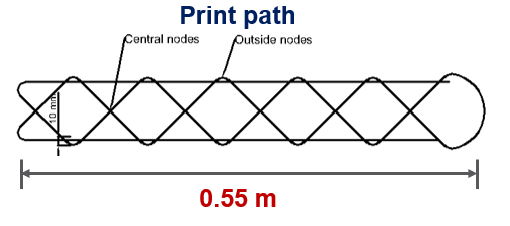
Image showing the print path for a grid panel that is fed into a gantry printer equipment to generate a part.
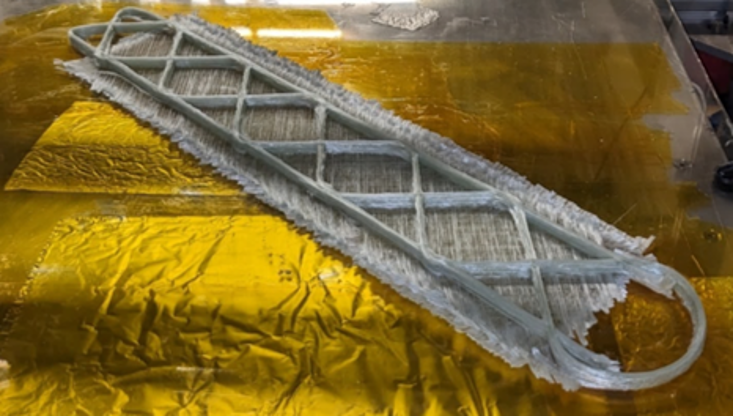
Image showing the in-situ consolidated grid panel after deposition.
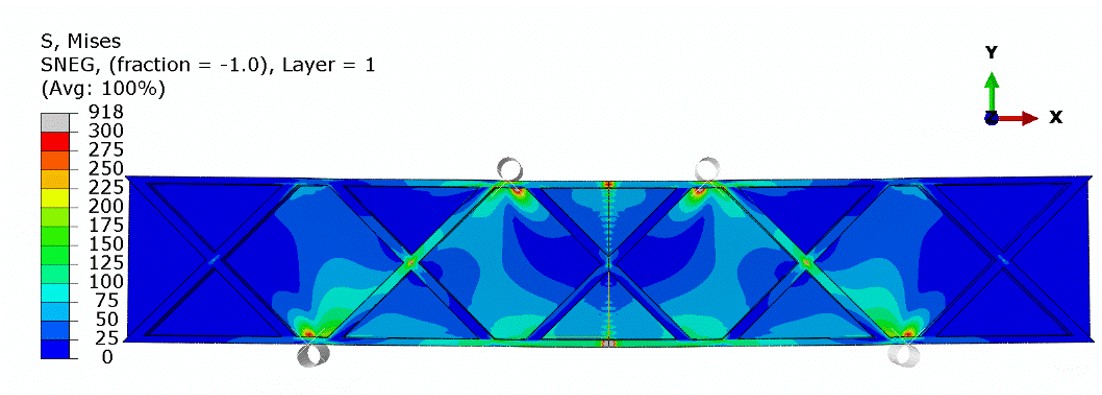
Image showing an FEA model predicting the mechanical performance of the grid panel in shear.
In-situ consolidation of composite sandwich panels
Most efforts to additively manufacture sandwich panels have typically used materials with low fiber content for the sandwich facings. In contrast, my research successfully utilized a combination of in-situ consolidation and fused filament fabrication (FFF) to produce sandwich panels with facings containing approximately 50% fiber volume. The research also succeeded in enhancing autohesion between the honeycomb core and the continuous fiber facings, significantly improving the structural integrity of the panels. Further details of this work can be found in my research paper, available [here].
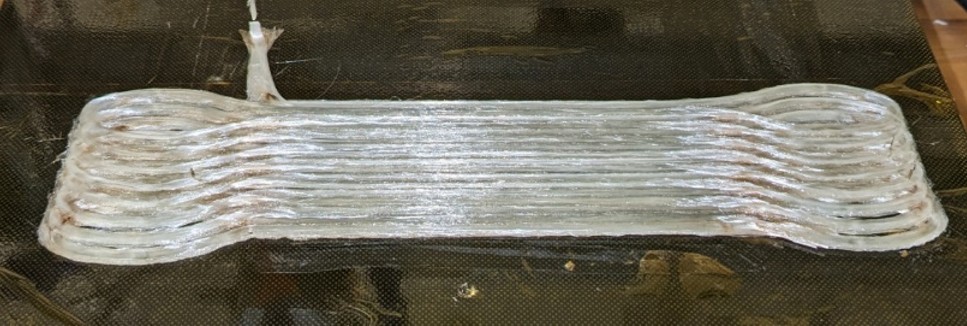
1. Image showing bottom facing deposited on build plate.
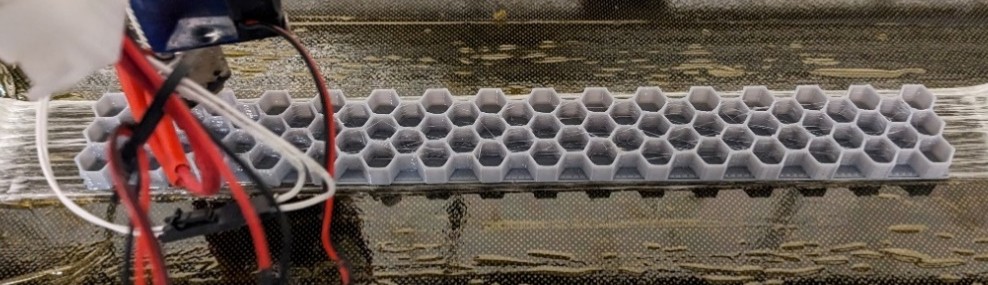
2. Image showing honeycomb core being deposited.
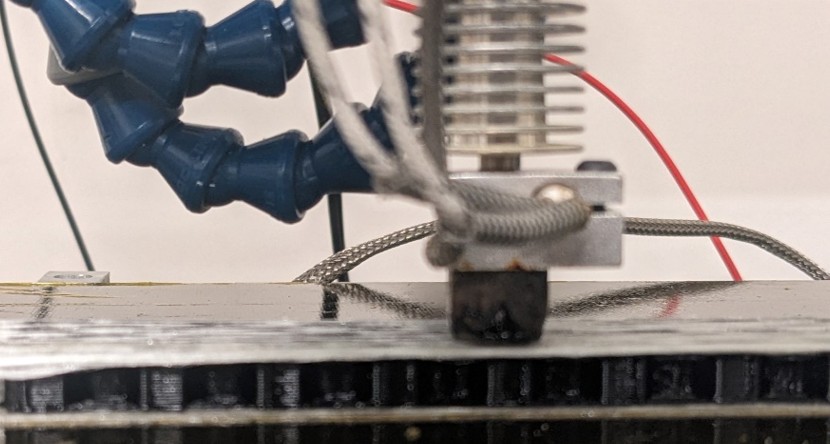
3. Image showing the top facing being deposited.
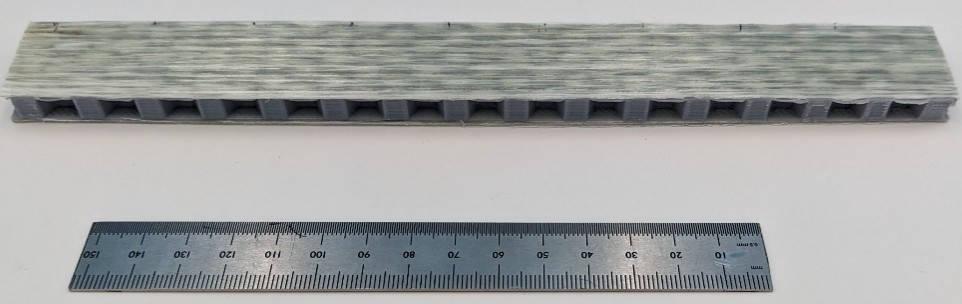
4. Image showing final sandwich panel.
Resin Infusion of Flat Laminates and Sandwich Panels
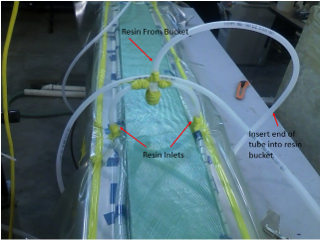
Various types of repairs were performed on composite laminates and sandwich panels made from composite materials commonly used in wind turbine blades. To facilitate the experimental and analytical study of repair behavior in composites, laminates and sandwich panels were specifically manufactured for this purpose. Further details of this work can be found in my thesis, available [here].
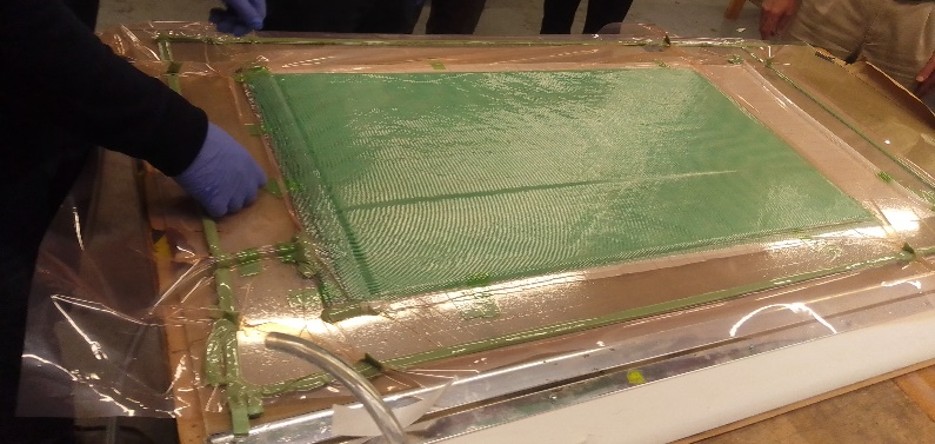
Image showing infusion setup.
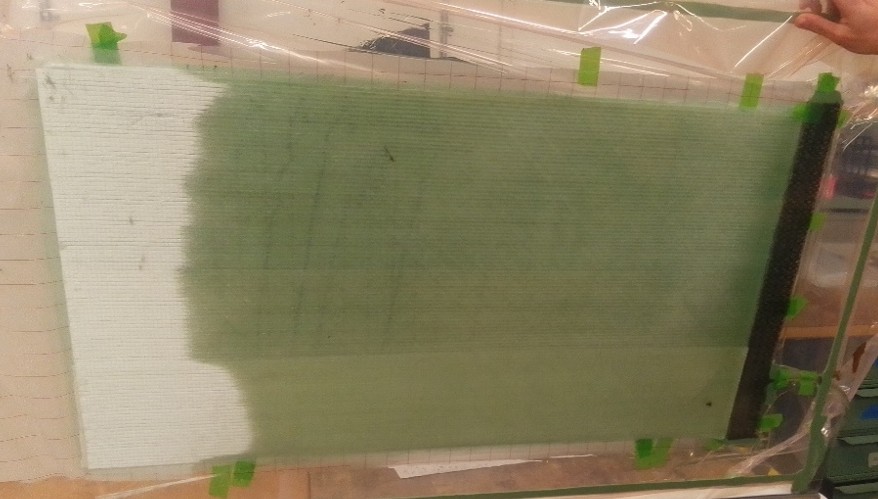
Image showing underside of mold indicating good wet-out.
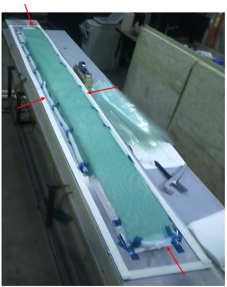
Image showing setup of infusion process of sandwich beam.